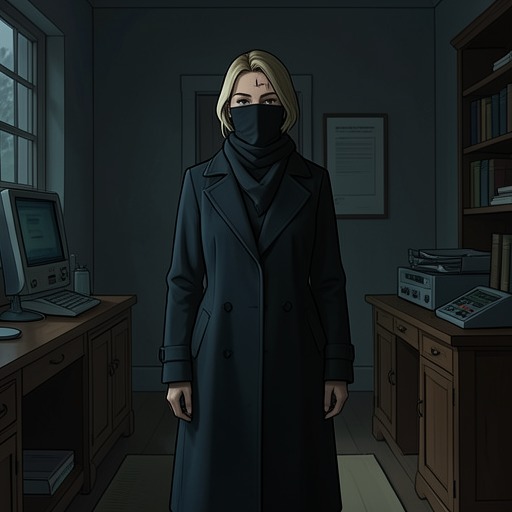
Rich Coleman
Cinder & EllaRich Coleman is Ella’s father, separated from her for years before her mother’s death brought them back into one another’s lives. After Ella’s suicide attempt, his fear for her safety became the basis for court-ordered guardianship and a move from Boston to California. His central conflict is therefore not simply whether he loves her, but whether he can make room for her choices: Ella wants a relationship with him, but rejects protection that feels like captivity.
Identity and Background
Rich is Ella’s father and Jennifer Coleman’s husband, and the father of Anastasia Coleman and Juliette Coleman. When he introduces Ella to the twins, he calls them his daughters and Ella their new stepsister; the distinction matters to Ella, who notices that he does not describe the girls as his stepdaughters. He presents himself with the confidence of an accomplished lawyer, but that polished public manner cannot erase the long absence behind their reunion.
Rich had neither seen nor spoken to Ella since she was eight. Ella recalls that when she was about six, he began calling her “Kleines,” an American nickname he said she needed. She suspects he was jealous of the closeness she already shared with her mother, who called her muñeca, or baby doll. The nickname thus carries two histories at once: Rich’s effort to claim a familiar place in his daughter’s life, and Ella’s attachment to the mother whose bond with her he could not replace.
Estrangement and Return
When Ella awakens from her coma, Rich is beside her hospital bed, but their reunion does not restore the years they lost. His looks of pity, fear, and discomfort leave Ella with the impression that he does not know how to speak to her or behave around her. She understands why he might be at a loss, yet that understanding does not make the distance between them less painful.
After Ella’s mother dies, Rich becomes responsible for bringing his daughter into the household he has built with Jennifer and the twins. He tells Ella that Jennifer and the girls have prepared for her arrival, and that a welcoming dinner and gifts may be waiting. Ella is not reassured: she does not want to meet the new family and is not ready to regard their house as home. When Rich calls her “Kleines,” she answers that she is too old for it, then admits to herself that the name hurts because it recalls her mother. Rich apologizes, but the small exchange exposes how even an affectionate gesture can carry the weight of an unaddressed past.
Protection and Control
Ella’s resistance to the move is grounded in a traumatic period of rehabilitation. After three months in hospital, seventeen operations, severe pain, limited movement, and being told she might never walk again, she attempted suicide. No one blamed her, but afterward others no longer trusted her own judgment about whether she posed a danger to herself. Rich responded by having her declared mentally unstable through the courts and compelling her, at eighteen, to move from Boston to California.
That intervention overrides a concrete plan Ella had made for an independent future. She intended to stay in Boston, complete the schooling she had missed online, and attend Boston University when ready. She had saved enough money to pay for college, in addition to funds her mother had set aside from the monthly checks Rich sent. To Ella, these savings demonstrate that she could have managed without being absorbed into her father’s household. Rich’s decision may arise from fear after her attempt, but its consequence is that he controls where she lives and what happens next, while she experiences herself as an adult treated as incapable.
Their conflict sharpens when Rich expects her to take part in family life. Ella tells him that she would still be only a distant memory to him if her mother had not died. Rich replies that he cannot change the past, insists he is doing his best, and says she must overcome her anger because she is staying with his family. Ella considers refusing outright, but decides that making less of a scene may help her leave the house sooner. Her compliance is tactical rather than a sign of forgiveness: Rich can require her presence, but cannot make her feel that the family is hers.
Negotiating a Relationship
In a later family moment, Rich notices Ella reacting to her chat window and asks whether something is funny. Her dry answer, followed by the exchange in which she and Cinder trade teasing insults about Brian Oliver, shows a different register of their connection: he is curious about her, while she can answer him without turning the interaction into a confrontation. Yet curiosity alone does not settle the deeper question of who gets to make decisions for her.
That question comes into focus in a conversation with Dr. Parish. Ella asks Rich to let her go when she is ready to leave the rehabilitation clinic and to relinquish his guardianship. She is legally an adult, she explains, but cannot make her own decisions; the person making them for her is nearly a stranger. She recognizes that Rich is trying hard, while insisting that what is best for him and his family need not be best for her. What she needs, she says, is people who trust her. Dr. Parish encourages Ella to say this directly to her father, and Rich does not look away, though the effort to remain encouraging is visibly difficult for him.
Ella does not ask Rich to abandon her. Instead, she separates a possible father-daughter relationship from compulsory family membership: they can get to know one another, share a meal or a film, and talk, but he must not keep her captive or force her to belong to a household she does not consider her own. She asks him not to repeat the harm her mother caused him by holding on too tightly. The distinction gives Rich a way to remain in her life without exercising control over it. After a long silence, he asks whether this is truly what she needs; Ella answers without hesitation and adds that it is what Anastasia needs, too.
Change and Significance
Rich’s response marks a change in the terms of their relationship. Ella sees in his eyes that he has made a decision, and by the time of the film premiere he is no longer her legal guardian. His adjustment is not complete: as Ella prepares to walk the red carpet, he gives her a one-o’clock curfew, prompting Juliette to remind him that Ella is nineteen and that his guardianship ended the day before. Rich asks them to indulge him because he has not yet had the chance to play the intimidating father and will not even get to meet Ella’s date. The old impulse to set rules remains, but now it is exposed as a late, somewhat comic performance rather than legal authority.
Rich’s significance lies in the tension between protection and autonomy. His fear follows a real crisis, yet the court’s intervention also makes his daughter’s estrangement from him more concrete: Ella is adult in age and intention but deprived of control over her own decisions. Repair begins not with an assertion of parental rights or a demand for instant forgiveness, but when he listens to the conditions she sets and relinquishes the power that had made closeness feel compulsory. By the red carpet, his attempt to act like a father can become affectionate rather than coercive precisely because Ella has regained the freedom to choose how near she stands to him.